
Do You Need Planning Permission for a Detached Home Extension in Essex?
Wondering if you need planning permission for a detached home extension in Essex? Our guide covers planning permission, building regulations, and how to apply.
Do You Need Planning Permission for a Detached Home Extension in Essex?
Adding an extension to your detached house in Essex can be a fantastic way to create more space, enhance your home’s value, and improve its functionality. However, one key question you need to answer before starting your project is: “Do I need planning permission?”
This article provides a comprehensive guide to understanding the rules, limitations, and processes involved in securing the necessary permissions for a home extension, including when you can proceed under permitted development rights.
Understanding Planning Permission
What Is Planning Permission?
Planning permission is the formal consent given by your local council or local planning authority (LPA) for specific building or development works. It ensures that proposed extensions comply with local building regulations and do not negatively affect the community.
For detached houses, the need for planning permission depends on various factors, including the size and location of the proposed extension.
Extensions Allowed Under Permitted Development
What Are Permitted Development Rights?
Permitted development rights allow homeowners to carry out certain types of work without needing full planning permission. However, these rights come with specific limitations and conditions.
When Can You Build Under Permitted Development?
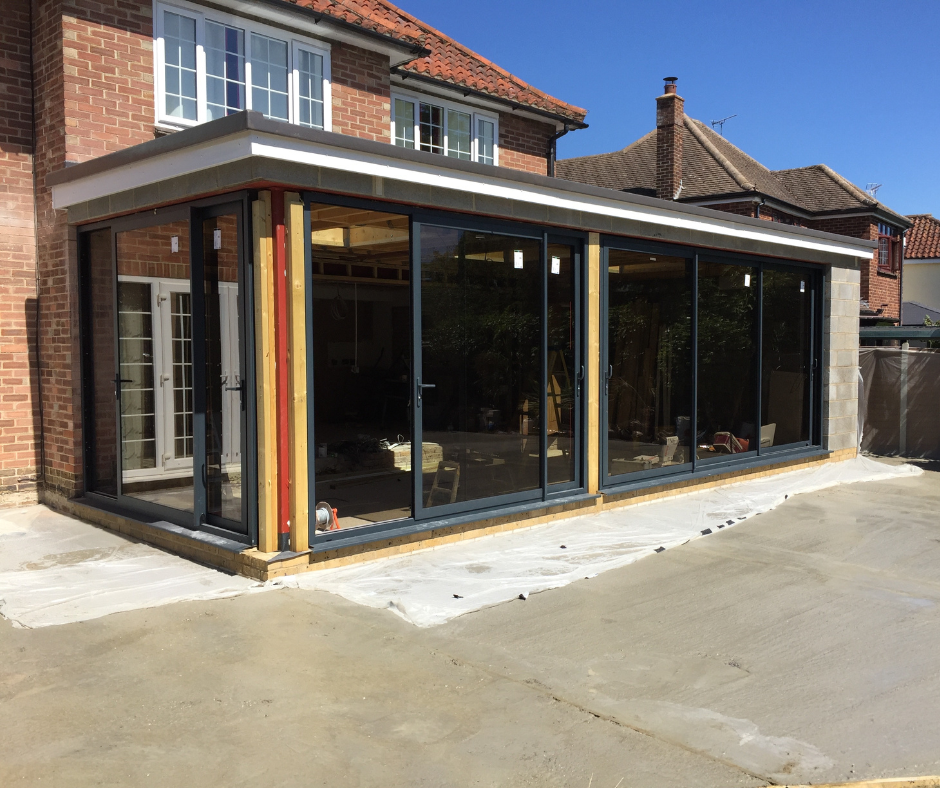
For a detached house, you can build certain extensions without applying for planning permission if your project meets the following criteria:
- The extension cannot exceed:
- Four metres in depth for a single-storey rear extension.
- Eight metres in depth under the larger single storey rear extension scheme (subject to prior approval).
- The height of the extension:
- Must not exceed the height at the eaves or the roof of the original house.
- Must not be higher than four metres overall.
- The extension must:
- Be built using materials similar to the original property.
- Not cover more than half the area of land surrounding the original house.
When You Need Planning Permission
If your proposed extension does not meet the criteria for permitted development, you will need to apply for planning permission. Examples include:
- Adding a two-storey extension.
- Building in a conservation area or under an Article 4 Direction.
- Making changes to a listed building.
- Extending beyond the rear wall of the original house by more than eight metres.
- Using materials that do not match the existing house.
Key Considerations for a Detached Home Extension
1. The Role of the Local Planning Authority
Your local planning authority (LPA) will assess your planning application to ensure your extension aligns with local legislation and policies. You can check requirements on the Planning Portal, the UK government’s official resource.
2. Planning Permission and Building Regulations
Even if your extension falls under permitted development, it must still comply with building regulations. These regulations ensure that your extension is safe, energy-efficient, and meets modern standards.
Building regulations cover:
- Structural integrity, such as walls and roof.
- Fire safety measures.
- Adequate drainage and insulation.
3. Submit a Planning Application
If you need planning permission, you will need to:
- Submit an application to your local council or through the Planning Portal.
- Include details like architectural plans, dimensions, and the materials used.
- Await approval, which typically takes 8-12 weeks.
4. Consult with Professionals
Working with a qualified architect and experienced builder ensures that your extension project complies with all requirements. An architectural professional can also help design a project that enhances your home while adhering to planning rules.
Tips for a Successful Extension in Essex
- Notify Neighbours: Keep good relations by informing your neighbour about your plans, particularly if the project involves a party wall agreement.
- Measure Carefully: Ensure the proposed work adheres to all size restrictions, including the distance beyond the rear wall and the overall height.
- Seek Expert Advice: If you’re unsure, consult with planning experts or Oaklea Construction for tailored guidance.
Why Choose Oaklea Construction?
At Oaklea Construction, we specialise in creating stunning, functional home extensions across Essex. Whether you’re planning a single-storey rear extension, a side extension, or a more ambitious double-storey extension, we have the expertise to make your vision a reality.
Our Services Include:
- Guidance on planning permission and building regulations.
- Assistance with architectural design and the planning application process.
- High-quality construction using durable, sustainable materials.
Contact Oaklea Construction Today
Let us help you create the perfect home improvement. Call us at 01245 377992 or email us at info@oakleaconstruction.co.uk for a free consultation!
Conclusion
Determining whether you need planning permission for a detached home extension in Essex requires careful consideration of local rules and permitted development rights. With the right planning and a trusted builder, your dream extension can add value to your home and transform your living space. Contact us today to get started on your extension project!
