

Side Extensions – Side Return Extension Ideas
Explore creative side extension ideas for your home! From single storey side extensions to planning permission tips, discover everything you need to know.
Single Storey Side Extensions – Side Return Extension Ideas
Introduction:
Side extensions are becoming increasingly popular due to their ability to provide more living space to your home, whilst not eating into your garden. Of course, you will need sufficient space down the side of your house to allow for a side extension so these are more suited to plots with a generous amount of land surrounding the building. If you live in a terraced house, it is likely that a rear extension will suit you better, especially if you live in a mid terraced house where a side extension is obviously not an option.
1. Types of Single Storey Side Extensions
- Side Return Extensions:
- Side return extensions are an ideal option for terraced houses where there is alley space between the boundary and the rear of the building. This allows you to create more living space and ideally bring more light into your home.
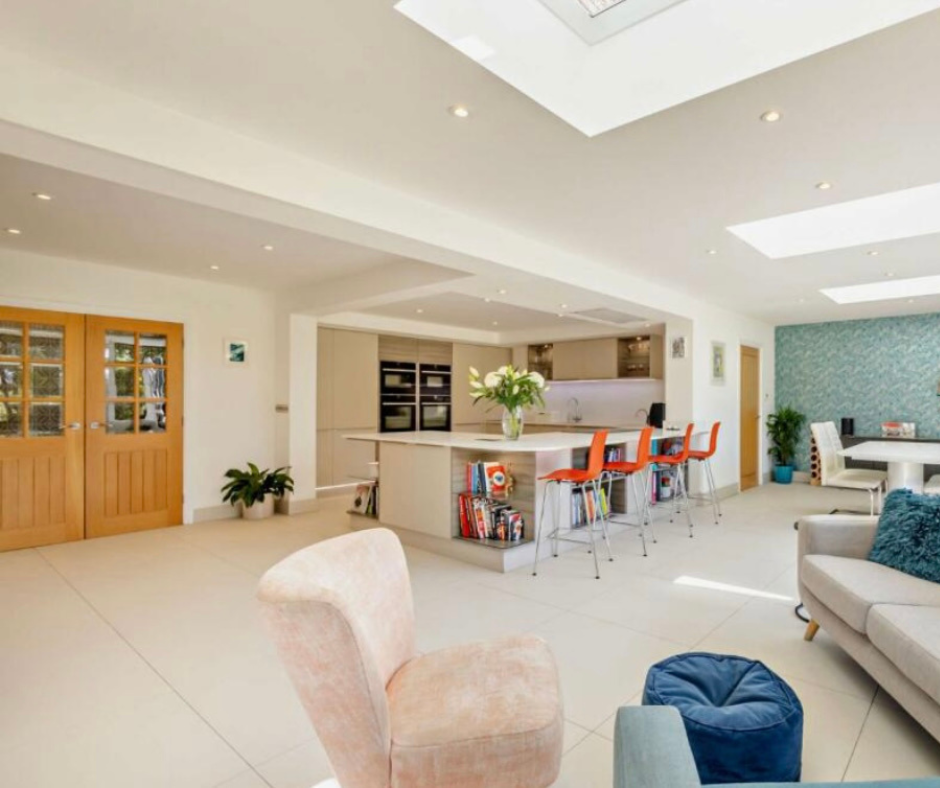
- Variations: There are many variations on the type of side return extension that you can have. Our favourites involve lots of glazing through use of skylights and bifold or sliding doors.
- Benefits: Adds functional living space such as more kitchen or living area, utility space or a reading area.
- Lean-to Extensions:
- A lean-to design is often simpler, with a pitched roof that “leans” against the original structure. This style is excellent for small areas or homes with planning restrictions.
- Design Ideas: Incorporate large windows or a slanted glass roof for optimal light. Suitable for expanding the kitchen or adding a small home office.
- Cost Consideration: Usually more cost-effective due to its simpler structure.
- Infill Extensions:
- Utilises an unused space between the house and a boundary wall, typically common in Victorian houses or terrace houses.
- Design Options: Install skylights or roof glazing to avoid obstructing light. This design blends seamlessly with the original building while adding extra space and a modern effect.
- Common Uses: You can add a cosy breakfast nook, study area, or expanded dining space.
2. Planning Permission and Building Regulations
- Permitted Development Rights:
- Permitted development rights can be used for side extensions that are:
- Single Storey
- The width of side extension must not have a width greater than half the width of the original house.
- Have a maximum height of 4m and width no more than half that of the original house.
- For more information on permitted development for extensions click HERE.
- It is recommended that you seek advice from an architect prior to building through permitted development and a certificate of lawful development is obtained prior to works starting.
- There are some instances where permitted development is not applicable and so this should be reviewed with a professional.
- Permitted development rights can be used for side extensions that are:
- Building Regulations Compliance:
- Regardless of planning permission, building regulations must be met. The extension can be designed to meet building regulations by an architects and structural engineer.
- The Builder will then follow the plans and engage with building control along the way to ensure compliance with the building regulations.
3. Designing the Perfect Side Extension
- Maximising Natural Light:
- Adding skylights or glass doors for ample light. This is deal for side return extensions to avoid dark interiors.
- Floor-to-ceiling glazed doors can be considered if the layout and budget allows. This makes the extension feel spacious and connected to the outdoors.
- Interior Design and Layout Ideas:
- A kitchen extension that opens into a dining area is perfect for family gatherings and creating a space to entertain.
- Home owners can utilise the extra space at the side for practical additions, such as a laundry area or pantry.
- Integrating with the Existing Structure:
- It is important to match the brick characteristics as best as possible so that the two structures blend seamlessly.
- You can also add a modern look through windows and doors as well as external surfacing such as paving or tiling.
4. Side Extension Costs
- Extension Cost Breakdown:
- We are based in Essex and typical costs range between £2,250 – £3,000 per square meter.
- The overall cost will depend on the level of specification, design intricacies and logistics.
- Using a Cost Calculator:
- There are many cost calculators online that will give you an indication of the cost based on the overall size.
- Once you have a detailed design and specification, we suggest that you invite 3 contractors to provide you with a quote to complete the works.
5. FAQs for Side Extensions
- Do I need an architect for a side extension?
- In short, yes. An architect will guide you through the design process and ensure you are covered from a legal perspective when it comes to planning permission or permitted development. Their detailed design will also mean that the contractors are all pricing based on the same information which will make it easier for you to understand if you are getting good value.
- How long does building a side extension typically take?
- Whilst this is largely dependant on size and logistics, an extension will often take 2-3 months.
- What permissions are needed for a double-storey side extension?
- Whilst you can complete two storey extensions through permitted development, there is more moving parts than a single storey proposal. It is therefore recommended that you engage with an architect to advise you on what is achievable through permitted development.
- Is a side extension a good way to add value to my home?
- Yes, providing more living space will always be of benefit. On top of this, you will be able to maintain the amount of garden space to the rear which will ultimately boost the property value.
6. Benefits and Drawbacks of Side Extensions
- Benefits:
- Adds Valuable Living Space: Great for families looking to expand without relocating.
- Versatility: Can be adapted to different uses, from a quiet home office to a bustling kitchen.
- Aesthetic Enhancement: Compliments both modern and traditional homes and can introduce natural light.
- Potential Drawbacks:
- Space Limitations: Particularly with terrace houses, extensions may be narrow and limit layout options.
- Neighbour Considerations: Side extensions may affect shared boundaries, so communicating with neighbours is essential.
- Cost Considerations: Side extensions may cost more per square meter if they require extensive glazing or structural changes.
Conclusion
This guide provides a thorough overview of single-storey side extensions, from planning and design to budgeting and construction. The article can also inspire homeowners to explore various extension styles and make the most out of their available space. Let me know if you’d like further expansion on any specific section.
